
Here’s something that might surprise you.
You know that runny nose your horse has right now? The one you’re probably thinking about treating with antibiotics?
What if I told you that giving antibiotics is actually stopping your horse from getting better?
I know. Sounds backwards, right?
Let me explain what’s really happening…
That Snot Is Actually a GOOD Thing
Stay with me here.
That snotty mess dripping out of your horse’s nose?
That’s not the problem. That’s the SOLUTION.
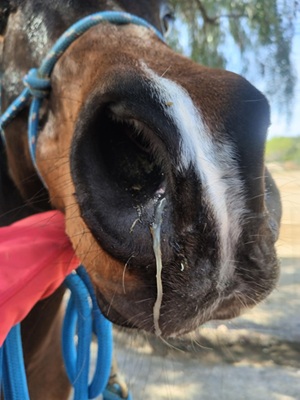
Your horse’s immune system is constantly dealing with toxins from the environment, chemicals in feed or water, heavy metals, bacteria, viruses – whatever gets thrown at it.
And when something needs to be eliminated, the body has a plan.
That snot? That’s literally your horse’s immune system REMOVING the problem. It’s the body’s natural detox pathway working exactly as designed.
But then we panic. We grab the antibiotics. And we shut the whole operation down.
Here’s What Really Happens When You Give Antibiotics
When you give antibiotics for a snotty nose, you’re interrupting the elimination process.
The snot stops flowing. (Which looks like success!)
But the toxins, chemicals, heavy metals, or whatever triggered the immune response?
Still. There.
Now they’re just sitting in your horse’s system because you stopped the body from getting rid of them.
So instead of being eliminated, they become a constant burden on the immune system.
Plus you’ve also stressed the liver, hit the kidneys hard, and completely disrupted the gut flora (all those good bacteria that keep the gastrointestinal system healthy).
You’ve traded one issue for multiple new problems.
So What Should You Actually Do?
Monitor These Things Daily:
– Temperature (normal is 99-101°F)
– Appetite and water intake
– Energy level
– Amount and color of discharge
Write it down so you can see if things are improving or getting worse.
Let The Body Work:
– Let the snot flow (that’s elimination happening)
– Keep nostrils clean with a warm, damp cloth
– Provide rest, fresh air, clean water, and quality hay
– Keep stress low
You’re not “doing nothing” here. You’re giving the body what it needs to complete the job.
Call The Vet Immediately If:
– Temperature over 103°F
– Horse stops eating completely
– Labored breathing or flared nostrils at rest
– Horse becomes lethargic and won’t move
But if your horse is still eating, drinking, has a normal or slightly elevated temp, and seems relatively normal?
They’re probably handling it just fine.
Understanding The Immune System
Here’s what most people don’t realize…
The immune system is basically your horse’s garbage disposal system.
Its entire job is to get rid of bad stuff that shouldn’t be in the body.
So when we talk about “supporting the immune system,” we’re really talking about helping the body’s ability to REMOVE stuff – not stopping the removal process.
And if the immune system is the garbage disposal, the liver is the MOTOR that runs it.
When the liver is working well, the whole elimination system works better.
How To Actually Support The Process
If you want to help your horse’s body get rid of whatever’s causing the problem:
– Herbal immune support – helps the overall elimination process. Either order online or offer planted herbal garden.
– Liver support product (like Liver Revival) – powers the system by supporting the organ that does most of the detox work
You’re not trying to stop the snot. You’re helping the body complete the job.
What About Chronic Discharge?
If it’s been going on for weeks, keeps coming back, or has been on and off for months – that’s when you call your vet AND consider Lung Revival product.
Because chronic discharge means the body’s garbage disposal system is overwhelmed and needs help.
In Summary:
Most snotty noses don’t need antibiotics.
They need time and support for the elimination process.
Your job is to monitor, keep your horse comfortable, and let the immune system eliminate the bad stuff.
Think garbage disposal, not symptom suppression.
Only use antibiotics for genuine emergencies (high fever, can’t breathe, won’t eat).
Your horse’s body knows what it’s doing. Trust the process.
I know this might be different from what you’ve been taught, but when you start working WITH your horse’s body instead of against it, you’ll see the difference.

We are looking for submissions for Dr. Tucker's "Featured Cases." If you have a puzzling case you want solved, we would love to post it to help others. Pictures needed, videos welcome. Email to support@wheredoesmyhorsehurt.com. Thank you.
Share This Post
