
What Does It Mean When a Horse Toes In?
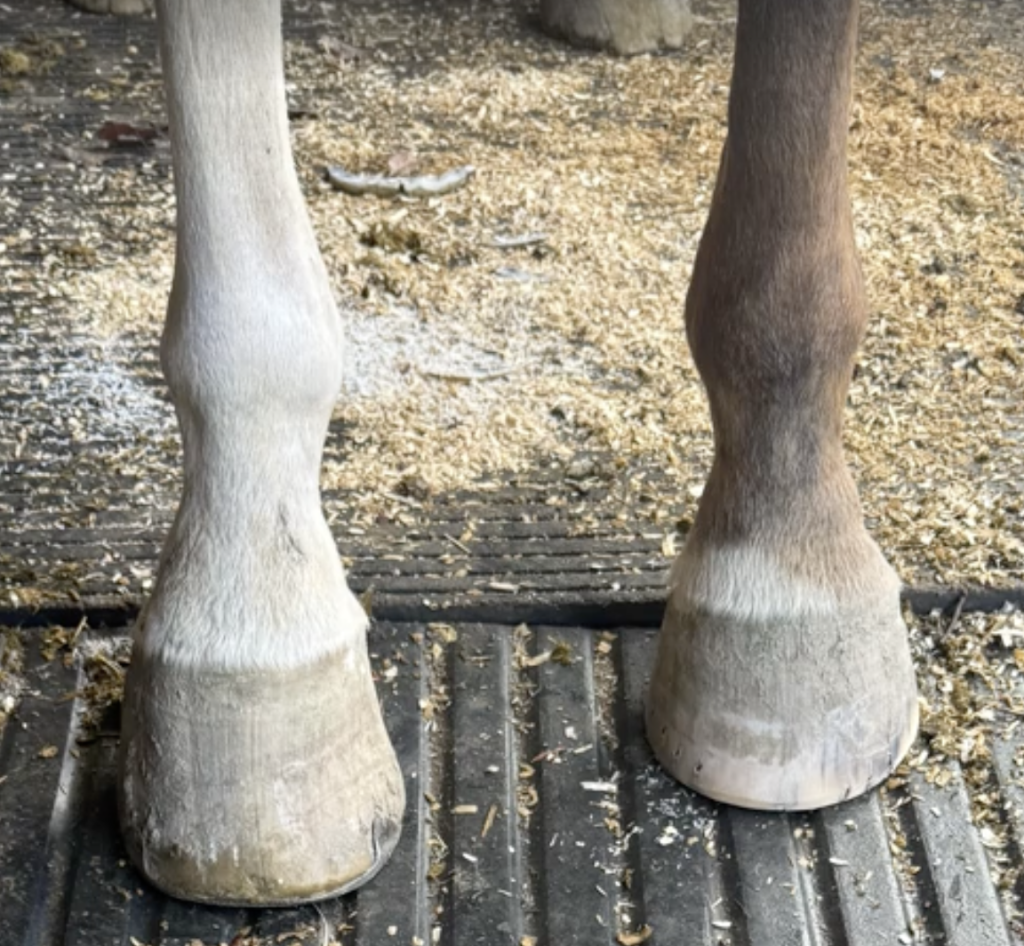
A toed-in horse is one of those things that gets written off pretty quickly. Vets, trainers, and farriers will often take one look and say it’s just conformation — the way the horse is built — and move on.
But here’s what I’ve found after 30 years of equine veterinary work: in the majority of toed-in horses, it’s not conformation at all.
It’s a sternum that has shifted back.
What Does It Mean When a Horse Toes In?
Just like with toeing out, most people immediately focus on the feet or the legs. And just like with toeing out, the feet and legs are usually just following orders from somewhere else entirely.
That somewhere else is the sternum.
The Sternum: Foundation of the Entire Chest
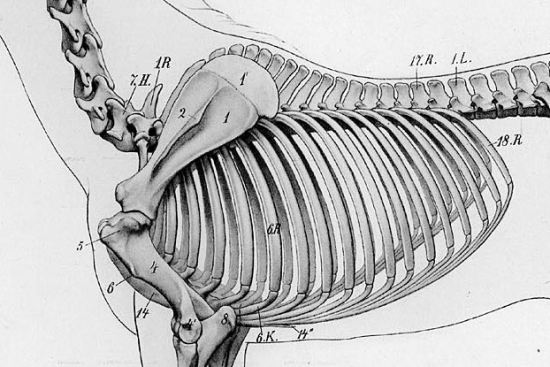
The sternum is the center bone of the horse’s chest — the foundation of the thoracic cavity. It runs from the front, centerpoint of the chest to roughly a hand’s width behind the elbow.
Because horses have no collarbone, the sternum carries a job that’s easy to underestimate. It is the anchor for the entire front-end structure.
Think of it as the foundation of a house. A level foundation means everything built on top sits correctly. A shifted foundation — even by a small amount — throws everything attached to it out of alignment, and the rest of the body spends enormous energy compensating.
When the sternum shifts backward, the toed-in pattern is what you get.
What Causes a Horse to Be Toed In?
- A kick to the front of the chest — direct trauma can push the sternum back
- A trailer accident — a sudden stop where a chest bar shoves into the chest
- A fall or stumble where the horse catches himself awkwardly on the front end
- Accumulated tension in the structures around the sternum over time
How a Backward Sternum Causes Toeing In
Here’s the chain reaction that happens when the sternum moves back:
The point of the shoulder is designed to line up with the front of the sternum.
When the sternum moves back, the shoulder no longer has that forward support. The shoulder blades drift inward — toward the center of the chest — just a bit.
The humerus, the lower bone of the shoulder, follows.
When the humerus falls inward, it pushes the elbow outward.
And when the elbow goes out, the leg rotates inward from the elbow down.
Including rotating the feet.
Toed-In Horse Problems
- Increased stress on the inside of the joints — When the leg rotates inward, the loading through the fetlock, knee, and elbow becomes uneven. Over time, this contributes to arthritis and soft tissue wear on the medial structures.
- Interference — Toed-in horses are more prone to hitting one leg with the other, particularly at the trot.
- Compensations up the chain — The shoulder, neck, and back all adapt to accommodate the rotation. Those adaptations become their own problems over time.
- Reduced performance — A horse whose foundation is off has to work harder to do everything. Collection, extension, lateral work — all of it is harder than it should be.
Can You Fix a Toed-In Horse?
Yes. In the majority of cases — yes.
For horses where this is caused by a misaligned sternum, it is not permanent.
Now, you might wonder — why hasn’t the body fixed this on its own? Horses roll. They shake. They move freely. If the sternum could just drift back into place naturally, it would have.
The fact that it hasn’t means something is keeping it from being fixed.
Toed-In Horse Treatment: What Actually Works
Treating the foot won’t fix this. Adjusting the trim won’t fix this , and you shouldn’t try to. Trimming the feet to “look straight” will cause more problems. Even manually repositioning the sternum may only hold temporarily if the primary problem isn’t addressed. The sternum will just drift back.
TBT — Tucker BioKinetic Technique — is designed specifically to find and fix the primary problem. Not the compensation you can see, but the root cause driving it.
Once the primary cause is identified and corrected energetically, the sternum is free to return to its correct position. And when the sternum is right, the leg rotation resolves.
That’s the difference between chasing a symptom and actually fixing the horse.

